
By Will Parnell, P.E. and Sarah Parnell
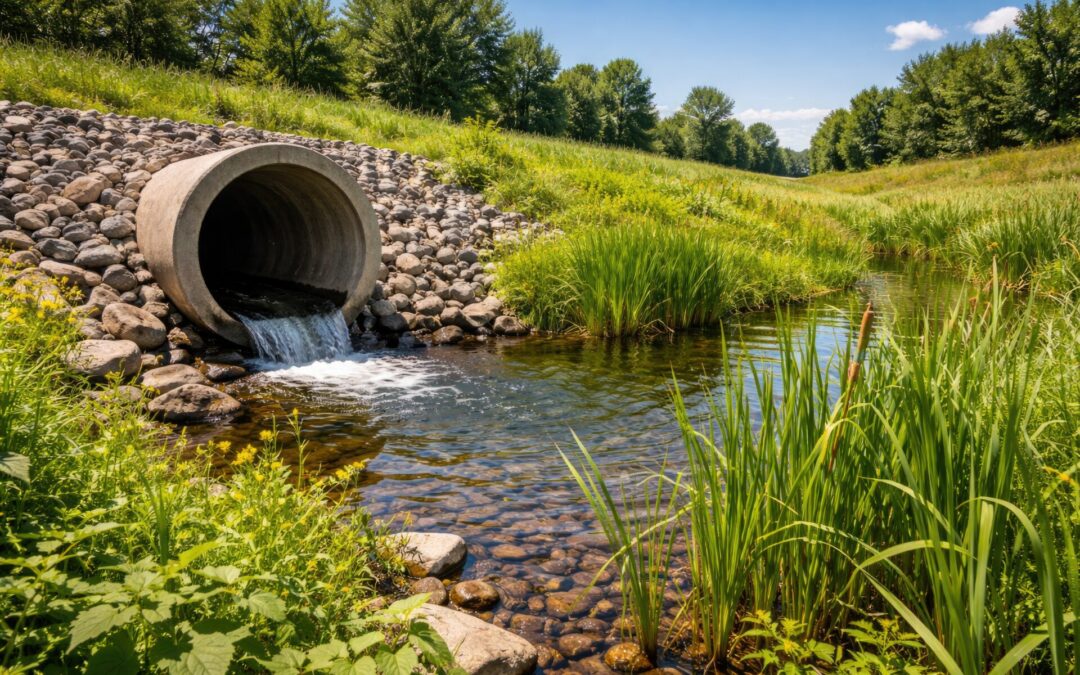
When most people think about stormwater management, they picture underground pipes, concrete channels, and detention ponds tucked behind strip malls. For decades, that conventional “gray infrastructure” approach was the standard: collect the water, hold it to the minimum code requirement, and get it out of the way. This method generally requires more real estate at the surface and a reserved area for the engineer to design in.
But communities across Texas are increasingly discovering that working with nature, rather than against it, produces better outcomes for their budgets, their residents, and their environment. Green stormwater infrastructure (GSI) and low impact development (LID) strategies are redefining what it means to manage stormwater well, and the results are worth paying attention to.
What Is Low Impact Development?
Low impact development is a land planning and engineering approach that mimics a site’s natural hydrology by managing rainfall at the source. Instead of routing runoff as quickly as possible into a centralized system, LID distributes stormwater management across a landscape using a variety of small-scale, often vegetation-based practices.
The goal is simple: slow it down, spread it out, retain onsite, and let it soak in where possible. What makes LID powerful is that it addresses water quantity and water quality at the same time, often while also improving the look and feel of the spaces people live and work in every day.
Innovative LID Practices Worth Knowing
Bioretention Cells and Rain Gardens
Bioretention cells are shallow, landscaped depressions designed to collect and filter stormwater runoff. They’re filled with engineered soil media and planted with native vegetation that can tolerate both periodic flooding and dry spells. As runoff enters the cell, pollutants are filtered through the soil, plants take up nutrients, and water either infiltrates into the ground or is slowly released into a downstream system.
Rain gardens are a smaller-scale version of the same concept and are particularly well-suited for residential neighborhoods, parking lot islands, and streetscapes. Rain gardens utilize a specialized sand filter media to remove pollutants and the stormwater infiltrates or is slowly released downstream. They’re cost-effective, low-maintenance once established, and become bio-filtration rain gardens when planted with Texas-adapted species.
Permeable Pavement
Traditional impervious pavement is one of the biggest contributors to stormwater runoff in developed areas. Permeable pavement systems, including pervious concrete, porous asphalt, and interlocking permeable pavers, allow rainwater to pass through the surface and into a gravel base layer below, where it can infiltrate into native soils or be collected for reuse.
These systems are increasingly practical for low-traffic areas like parking lots, pedestrian paths, and residential streets, and they can significantly reduce the size requirements for downstream detention infrastructure.
Green Roofs
Green roofs, or vegetated roofs, replace traditional roofing with a layered system of waterproofing, growing media, and plant material. They absorb rainfall before it ever becomes runoff, reduce urban heat island effects, improve building energy efficiency, and extend the life of roofing membranes by protecting them from UV exposure and temperature extremes.
While more common in dense urban environments, green roofs are gaining traction in apartments and municipal facilities such as libraries, fire stations, and civic buildings as communities look for multi-benefit infrastructure investments.
Urban Tree Canopy and Structural Soil Systems
Trees are among the most underrated stormwater management tools available. A single mature tree can intercept thousands of gallons of rainfall annually through its canopy, roots, and surrounding soil. Structural soil systems, sometimes called suspended pavement or CU-Structural Soil, allow trees to thrive in urban hardscape environments by creating a load-bearing soil matrix beneath paved surfaces that supports both traffic and healthy root growth.
Investing in urban tree canopy is one of the most cost-effective long-term stormwater strategies a municipality can pursue, and the co-benefits in air quality, heat reduction, and community livability are well documented.
Constructed Wetlands
Constructed wetlands are engineered systems designed to replicate the water quality and hydrologic functions of natural wetlands. They use shallow water, native aquatic plants, and biological processes to treat stormwater runoff before it reaches creeks, rivers, or reservoirs. They can be designed as standalone treatment systems or integrated into larger regional drainage networks.
Beyond their functional value, constructed wetlands often serve as community open space and wildlife habitat, making them a strong candidate for parks and trails planning and greenway corridor projects.
Urban Bioswales and Vegetated Swales
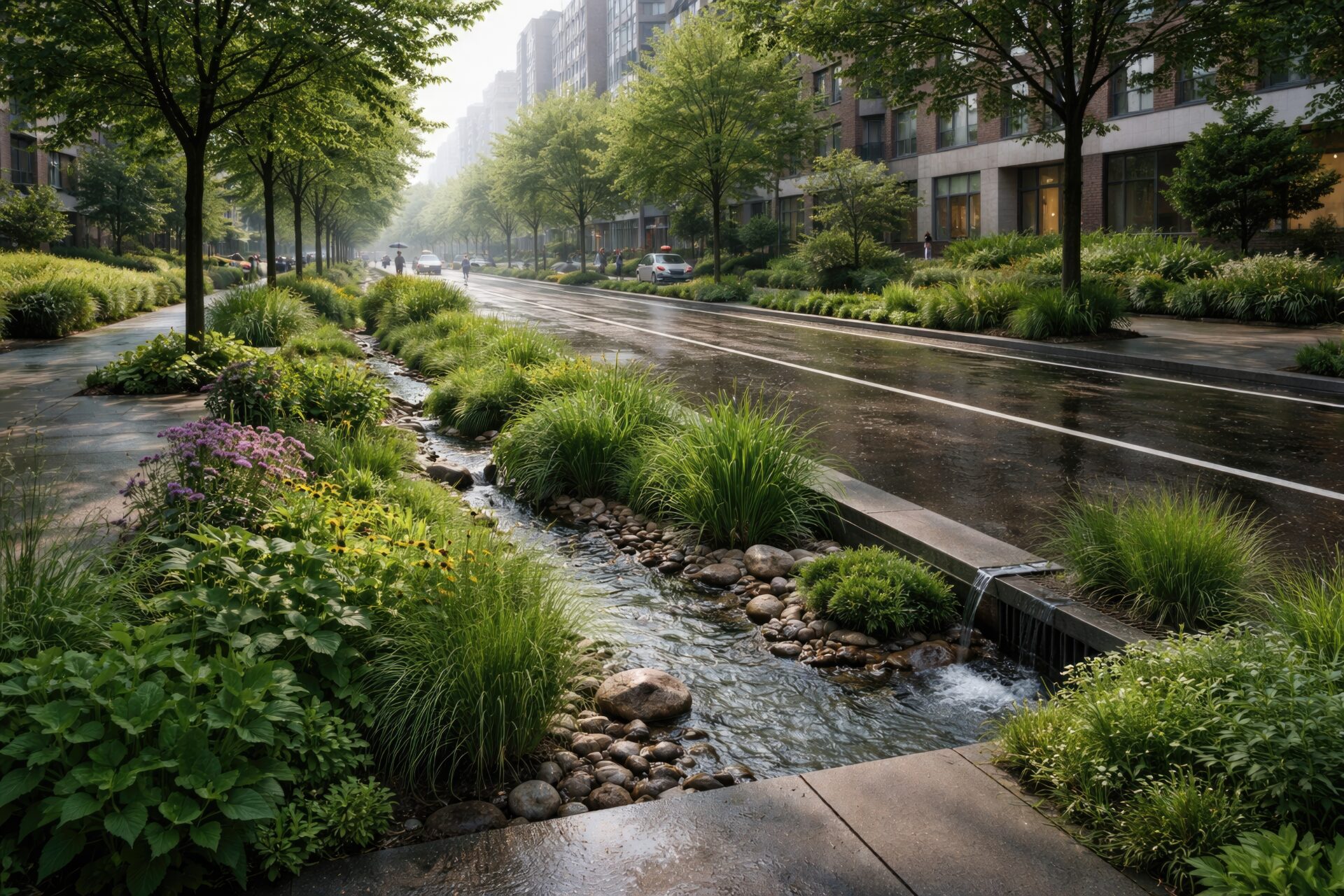
Bioswales are linear vegetated channels designed to slow, filter, and infiltrate stormwater runoff as it traverses the site. Unlike traditional concrete drainage ditches, bioswales use dense, deep-rooted native plantings to reduce flow velocity, trap sediment and pollutants, and promote infiltration along the drainage path.
They’re especially effective along roadway corridors, commercial parking areas, and trail systems, and they can often replace conventional curb-and-gutter drainage at a lower long-term cost.
Why This Matters for Texas Communities
Texas communities face a challenging combination of pressures: rapid growth, aging infrastructure, increasingly intense storm events, and prolonged drought cycles that shift quickly into flooding. Conventional stormwater systems designed to serve a city of 10,000 don’t always scale gracefully to serve a city of 50,000 and replacing them is enormously expensive.
LID and green infrastructure offer a different path. By incorporating these practices into new development standards, capital improvement planning, and park and streetscape design, communities can build stormwater resilience incrementally, without always waiting for a complete system overhaul.
There are also meaningful water quality benefits. Many Texas waterways face impairment from nonpoint source pollution, the kind that washes off streets, parking lots, and lawns during rain events. Green stormwater infrastructure helps filter that pollution before it reaches creeks and rivers, supporting better outcomes for downstream communities, aquatic habitat, and compliance with water quality standards.
Designing LID That Works in the Texas Context
Not every LID practice works everywhere. Soil type, topography, land use, and rainfall patterns all influence which tools are appropriate for a given site or community. In parts of Texas with clay-heavy soils, for example, infiltration-based practices need to be carefully sited and designed to avoid creating drainage problems rather than solving them.
That’s where experienced engineering and environmental professionals make a difference. Effective green stormwater design requires a solid understanding of site hydrology, local regulations, TCEQ requirements, and long-term maintenance considerations. Done well, it produces infrastructure that functions reliably, adds value to the surrounding community, provides more developable areas, and supports a healthier water environment for years to come.
At Parnell Engineering, our team works with municipalities, developers, and landowners across Texas to design stormwater and drainage solutions that are both practical and forward-thinking. Whether you’re planning a new development, updating a master drainage plan, or looking for ways to improve water quality in your community, we’re here to help you find the right approach.
Contact us at 512.431.8411 or visit parnellengineeringinc.com to learn more.
Related Articles
Wildlife Management Plans and 1-d-1 Valuation: Turning Land Stewardship into Long-Term Habitat Value
How Texas landowners can align habitat improvement, environmental documentation, and long-term conservation goals. By Sarah Parnell, President/Co-Founder, Certified Wildlife Biologist and USFWS GCWA Permit Holder For many Texas landowners, open land is more than a...
Beneath I-35: Austin’s Bold Flood Resilience Vision
For Austin and the surrounding Central Texas region, the benefits are tangible. A more resilient I-35 corridor supports mobility and commerce. Better stormwater infrastructure reduces flood exposure. Photo Credit: TxDOT By Will Parnell, PE - Parnell Engineering,...
What Is a Water Master Plan and Does Your City Need One?
As Texas faces historic drought conditions and relentless population growth, water planning isn't optional it's survival. By Will Parnell, PE - Parnell Engineering, Inc. Texas is no stranger to water challenges. But right now, communities across the state are facing a...