
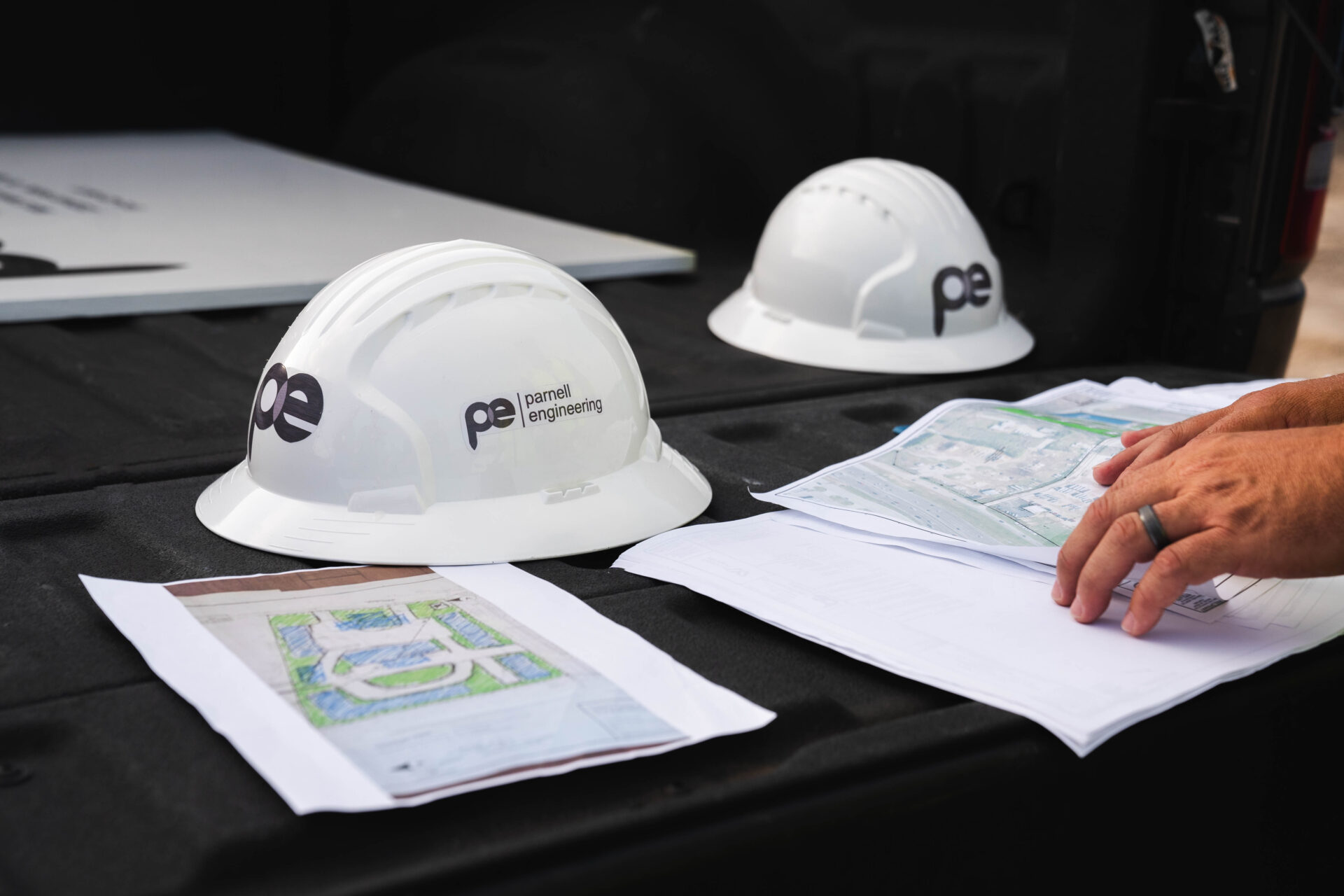
Whether you’re buying your first tract of land or expanding an existing portfolio, understanding the site development process before you invest can save you time, money, and a great deal of frustration.
By Will Parnell, PE – Parnell Engineering, Inc.
Owning land in Texas is a dream for many — and turning that land into a productive, developed asset is a goal shared by homebuilders, commercial developers, investors, and first-time landowners alike. But raw land rarely speaks for itself. Behind every subdivision, commercial pad site, or custom home lot is a carefully coordinated development process involving engineers, planners, regulators, and contractors. Knowing what that process involves — and what to watch out for — is the difference between a project that runs smoothly and one that drains resources in the form of time and budget before a single foundation is poured.
This guide is designed to give landowners and developers a practical, plain-language overview of the site development process: what to evaluate before you buy, what to expect once you’re ready to build, and the key do’s and don’ts that experienced civil engineers see overlooked time and again.
Before You Buy: Due Diligence That Can Make or Break a Deal
The most expensive mistakes in land development are made before the first shovel hits the ground — often before the ink is even dry on a purchase contract. The feasibility of a parcel for your intended use depends on a wide range of physical, regulatory, and infrastructure factors that are not visible from a drive-by or a satellite image. Conducting thorough due diligence before closing is not optional — it is the foundation of any successful development project.
Key Questions to Ask Before Purchasing Land
Every prospective land purchase should be evaluated against the following considerations:
- What is the zoning designation, and does it align with your intended use? Rezoning is possible, but it is a time-consuming and uncertain process that should not be assumed as part of your project plan.
- Is the property inside or outside city limits? Properties in the extraterritorial jurisdiction (ETJ) of a municipality may still be subject to subdivision platting requirements and some development standards even without full city zoning.
- What utilities are available, and where are they located? The presence — or absence — of water, wastewater, electricity, and natural gas service can significantly affect project feasibility and cost.
- Is the property in a FEMA Special Flood Hazard Area (100-year floodplain)? Flood-prone land can still be developed in many cases, but it requires additional engineering, may require fill, and can affect financing and insurance costs.
- What are the topographic conditions? Steep slopes, rock outcrops, and highly variable terrain can dramatically increase grading and infrastructure costs.
- Are there any easements, deed restrictions, or encumbrances on the property that could limit its use or development?
- What is the soil type, and is it suitable for construction? Expansive clays, soft soils, or caliche-heavy terrain can affect foundation design, pavement thickness, and drainage system performance.
- Are there any environmental constraints — wetlands, endangered species habitat, protected trees, or regulated waterways, karst geology, aquifer zones, — on the property?
- Is there a Phase I Environmental Site Assessment Report? Is there a need for contamination of the soil or groundwater to be assessed?
- What is the distance to existing roadway access, and what improvements might be required for traffic impact?
|
💡 Pro Tip: Commission a Feasibility Study First Before committing to a purchase, consider engaging a civil engineering firm to perform a high-level feasibility review or site assessment. A few thousand dollars spent evaluating a parcel before closing can reveal issues that would cost hundreds of thousands to resolve — or that make a tract undevelopable for your intended purpose entirely. |
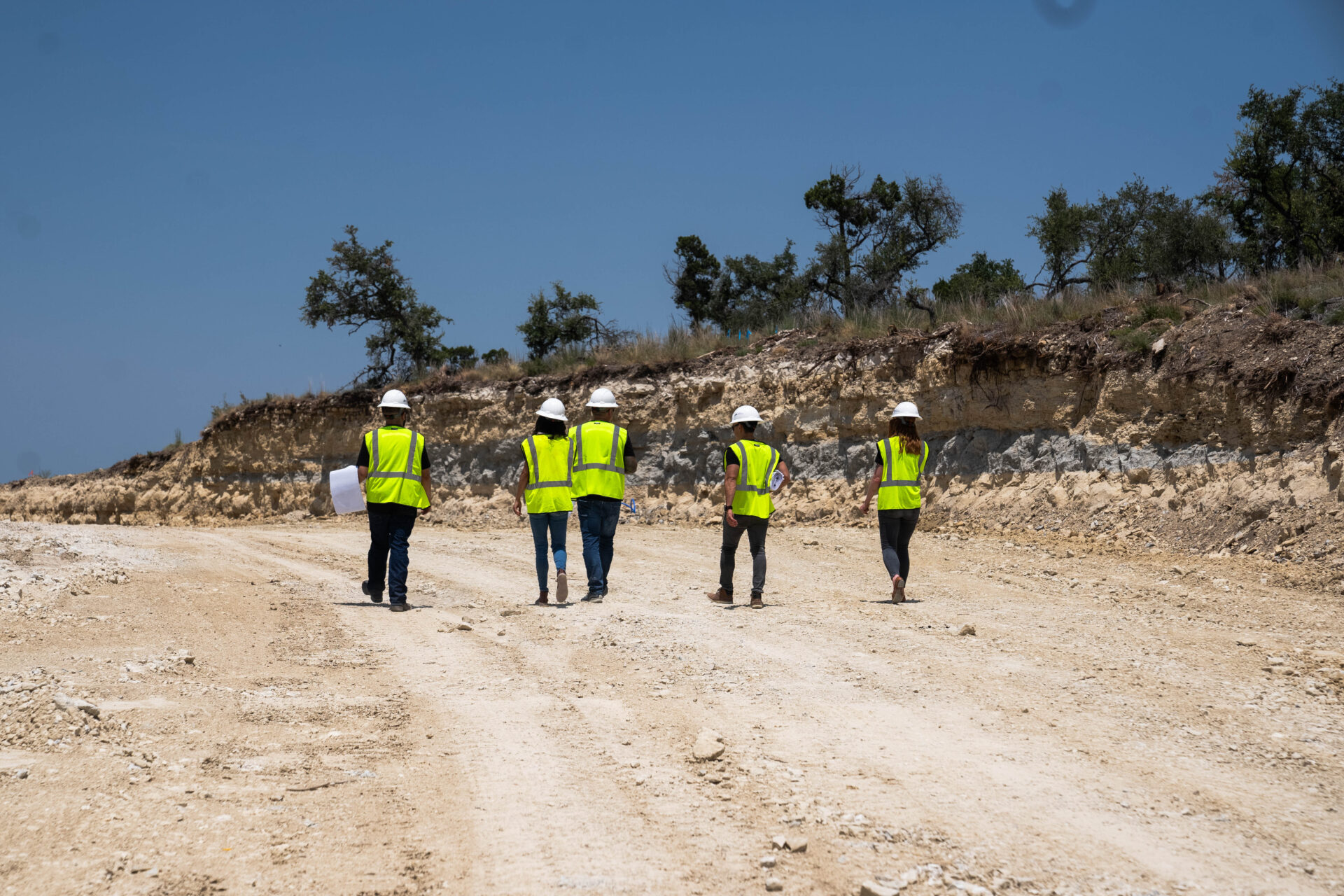
The Site Development Process: A Practical Overview
Site development is not a single event — it is a multi-phase process that unfolds over months (and sometimes years), involving coordination among engineers, surveyors, environmental consultants, regulatory agencies, utility providers, and contractors. While every project is unique, most land development efforts follow a predictable sequence of major milestones.
- Boundary Survey and Title Review: Before any engineering work begins, a current boundary survey should be obtained to confirm the legal boundaries of the property, identify any easements or encroachments, and establish the baseline for all future design work. A title review should also be conducted to identify any deed restrictions, mineral rights issues, or other legal encumbrances that could affect development.
- Topographic and Tree Survey and Site Assessment: A topographic and tree survey documents the existing elevations, drainage patterns, trees over 8”,, and physical features of the site. This information forms the foundation for all grading, drainage, and utility design. Simultaneously, a site assessment should evaluate soil conditions, flood zone status, utility availability, and any environmental constraints.
- Concept Planning and Entitlement: With survey data in hand, a civil engineer can prepare a concept plan or site layout that tests the feasibility of the intended development program on the property. This phase also includes any required entitlement actions — rezoning, variance requests, preliminary plat approval, or conditional use permits — which must be secured before detailed design can proceed.
- Preliminary Engineering and Agency Coordination: Preliminary engineering translates the concept plan into a more detailed design that can be reviewed by regulatory agencies. This typically includes preliminary grading and drainage studies, utility routing concepts, and traffic impact analysis where required. Early coordination with the city, county, TxDOT, utility providers, and other agencies helps identify requirements and potential conflicts before the design is finalized.
- Platting (If Required): Most development requires the land to be “legal parcel for development”. This can be achieved with a platting exception or submitting a platting application. The subdivision of land is formally recorded through a platting process with the County or City or both. The plat is a legal document that establishes lot boundaries, easements, right-of-way dedications, and other public infrastructure commitments. Platting requirements vary by jurisdiction but typically require Planning Commission or City Council approval and must be recorded with the county clerk before lots can be sold or building permits issued.
- Final Construction Plans and Permit Submittals: Final construction plans — also called civil construction documents — provide the full engineering detail needed to build the project. These plans typically include grading and drainage plans, paving and geometry plans, utility plans (water, wastewater, storm drainage), erosion control plans, and construction details. Plans are submitted to the appropriate reviewing authorities for approval, and revisions are made in response to review comments until permits are issued.
- Construction and Inspection: Once permits are in hand, construction can begin. Site development construction typically involves clearing and grubbing, rough grading, underground utility installation, paving, fine grading, and erosion control establishment. Most jurisdictions require periodic inspections by the city or county during construction, and some require a third-party materials testing firm to document compaction, concrete strength, and other quality benchmarks.
- Final Inspections, As-Builts, and Acceptance: At the conclusion of construction, final inspections are conducted by the relevant agencies. The engineer of record typically prepares as-built drawings documenting actual field conditions, and the public infrastructure (streets, utilities, drainage) is formally accepted by the jurisdiction. At this point, the project is substantially complete and ready for vertical construction — building permits can be issued, and lots can be conveyed to builders or end users.
|
⏱ Realistic Timeline Expectations Simple site development projects in cooperative jurisdictions can sometimes move from concept to construction in 6 to 12 months. More complex projects — particularly those requiring rezoning, environmental permitting, TxDOT driveway or drainage permits, or large-scale plating, or those with a highly sensitive jurisdiction (e.g. City of Austin) may have a longer acquisition to construction start. Build regulatory timelines into your pro forma from day one. |
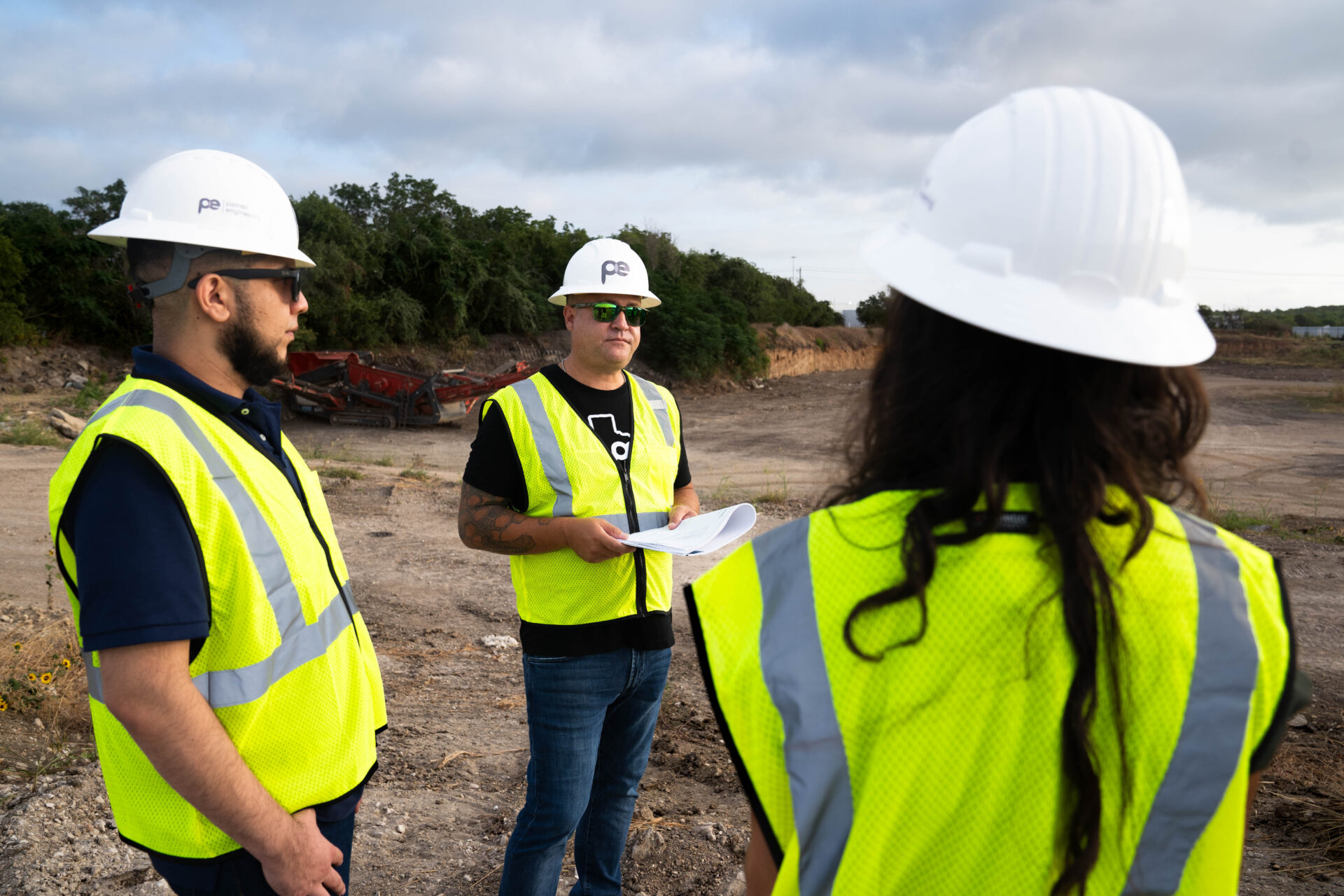
Do’s and Don’ts for Land Developers
✔ What You Should Do
- Engage a licensed civil engineer early — ideally during the due diligence phase, before you close on the property.
- Obtain a current boundary, topographic, and tree survey before beginning any design work and understand your environmental constraints.
- Research the regulatory environment thoroughly: zoning, subdivision ordinances, flood regulations, and utility extension policies can all significantly affect your project scope and budget.
- Build contingency into your project budget — a minimum of 10 to 15 percent for site development is standard, and more is warranted for sites with known unknowns.
- Coordinate with utility providers early to understand service availability, extension requirements, impact fees, and lead times for new service.
- Plan for infrastructure capacity — make sure the roads, water, and wastewater systems you’re tying into can accommodate your project’s demands.
- Communicate regularly with your civil engineer, attorney, and other project team members throughout the process — surprises are almost always more manageable when caught early.
- Understand that regulatory agency review timelines are largely outside your control — build buffer into your schedule accordingly.
- Visit the site in person, in different weather conditions, if possible, to observe drainage patterns, access conditions, and site character firsthand.
✘ What You Should Not Do
- Do not purchase land without conducting thorough due diligence on its development feasibility for your specific intended use.
- Do not purchase land without conducting a Phase I Environmental Site Assessment. This also aids is CERCLA liability protection should environmental hazards be uncovered later.
- Do not assume that because a property is zoned correctly, it can be developed as planned — physical constraints can be just as limiting as regulatory ones.
- — many properties carry use restrictions that are buried in deed restrictions or neighborhood plan overlays
- Do not rely solely on county appraisal district records, online maps, or prior surveys for engineering or legal purposes — obtain current, project-specific survey data.
- Do not clear, grade, or disturb land without the required permits — unpermitted grading can result in stop-work orders, fines, and costly remediation requirements.
- Do not underestimate infrastructure costs — off-site utility extensions, road improvements, and detention facilities are frequently the largest cost drivers on a development project and are often not reflected in the land price.
- Do not assume that a verbal indication of approval from a city or county staff member constitutes a permit or formal commitment — get everything in writing.
- Do not over-design your site for your first project — work with your engineer to economically design the infrastructure for your actual development program.
- Do not skip the geotechnical investigation (soils report) — foundation design, pavement design, and retaining wall design all depend on subsurface conditions that cannot be assumed.
- Do not wait until problems arise on-site to involve your engineer — proactive communication during construction protects everyone.
Additional Considerations That Can Make or Break a Project
Drainage and Floodplain Management
Drainage is one of the most consequential — and most frequently underestimated — aspects of site development. Texas rainfall is intense and unpredictable, and jurisdictions across the state have increasingly stringent stormwater management requirements. Your project may be required to provide on-site detention to limit post-development runoff rates, treat stormwater for water quality before discharge, or avoid impacts to FEMA-designated floodplains and floodways. Understanding the drainage constraints on your property from the outset is critical to accurate cost estimating and design.
Impact Fees and Public Infrastructure Costs
Most cities and many municipal utility districts (MUDs) in Texas assess impact fees for water and wastewater service connections. These fees can range from a few thousand to tens of thousands of dollars per lot or connection, and they can represent a significant line item in your development pro forma. Additionally, you may be required to extend public infrastructure — water mains, sewer lines, or roadways — to serve your project, with costs borne by the developer. Understanding these obligations upfront is essential to accurate financial modeling.
MUDs, WSCs, and Special Districts
Texas has a robust system of special purpose districts — Municipal Utility Districts (MUDs), Water Supply Corporations (WSCs), Public Utility Districts (PUDs), and others — that provide utility service to areas outside city limits. If your property is not currently served by a municipality, you may need to create a new district, annex into an existing one, or negotiate a service agreement with a nearby provider. Each of these paths involves its own regulatory process, timeline, and cost structure.
Traffic and Access
Depending on the size and type of your development, a Traffic Impact Analysis (TIA) may be required by the city, county, or TxDOT. Access to your development — including the number, location, and design of driveways and intersections — must be approved by the appropriate roadway authority. Required roadway improvements, turn lanes, or traffic signals can add significant cost and time to a project and should be evaluated as part of early feasibility review.
Environmental Constraints
Environmental constraints often represent the greatest source of uncertainty during project development and can significantly influence schedule, cost, and constructability if not identified early. Jurisdictional waters and wetlands, threatened and endangered species habitat, cultural resources, floodplain encroachments, karst features, hazardous materials concerns, and local permitting requirements may trigger additional surveys, design modifications, agency coordination, or seasonal work restrictions. Early environmental due diligence and proactive coordination with regulatory agencies help minimize delays, reduce redesign costs, and ensure permitting pathways remain aligned with overall project objectives.
Ready to Turn Your Land Into a Development?
Whether you’re evaluating a raw land purchase, navigating the entitlement process, or ready to move forward with construction plans, having the right civil engineering team in your corner from the start makes all the difference. Parnell Engineering brings hands-on experience in site development across Central Texas, with a practical, client-focused approach to every project — from initial feasibility through final acceptance.
Contact Will Parnell today to discuss your project, ask questions, or schedule a site visit. No project is too early in the process to benefit from a conversation with an experienced civil engineer.
Will Parnell, Parnell Engineering
Phone: 512-431-8411
Email: will.parnell@parnellengineeringinc.com
Disclaimer: This blog is intended for general informational purposes only and does not constitute legal, engineering, or regulatory advice. Development feasibility and requirements vary significantly by jurisdiction and project type. Consult a licensed civil engineer and qualified legal counsel for guidance specific to your project.
Related Articles
Wildlife Management Plans and 1-d-1 Valuation: Turning Land Stewardship into Long-Term Habitat Value
How Texas landowners can align habitat improvement, environmental documentation, and long-term conservation goals. By Sarah Parnell, President/Co-Founder, Certified Wildlife Biologist and USFWS GCWA Permit Holder For many Texas landowners, open land is more than a...
Beyond the Pipe: How Green Stormwater Infrastructure Is Changing the Way Texas Communities Manage Water
By Will Parnell, P.E. and Sarah Parnell When most people think about stormwater management, they picture underground pipes, concrete channels, and detention ponds tucked behind strip malls. For decades, that conventional "gray infrastructure" approach was the...
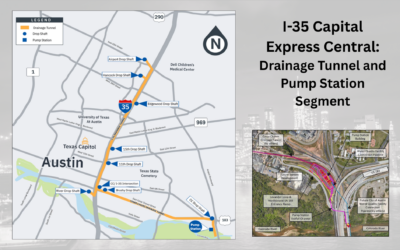
Beneath I-35: Austin’s Bold Flood Resilience Vision
For Austin and the surrounding Central Texas region, the benefits are tangible. A more resilient I-35 corridor supports mobility and commerce. Better stormwater infrastructure reduces flood exposure. Photo Credit: TxDOT By Will Parnell, PE - Parnell Engineering,...