

As Texas faces historic drought conditions and relentless population growth, water planning isn’t optional it’s survival.
By Will Parnell, PE – Parnell Engineering, Inc.
Texas is no stranger to water challenges. But right now, communities across the state are facing a convergence of pressures that is unlike anything seen in recent memory. Record-breaking drought conditions have stretched reservoirs to critically low levels. Aquifers that have been quietly relied upon for generations are declining. And at the same time, Texas continues to be one of the fastest-growing states in the nation adding residents, businesses, schools, and demand on already-strained water systems every single day.
For city leaders, county officials, and utility managers, the question is no longer whether to act it’s how to act strategically before a water crisis becomes a water emergency. That’s exactly where a Water Master Plan comes in.
What Is a Water Master Plan?
A Water Master Plan is a comprehensive, long-range strategic document that evaluates a community’s existing water infrastructure, projects future demand based on growth forecasts and climatic trends and outlines a prioritized roadmap of capital improvements needed to ensure reliable water service typically over a 10 to 20-year horizon.
A well-developed plan typically includes:
- A detailed assessment of current water supply, storage, and distribution capacity
- Hydraulic modeling to identify pressure deficiencies, aging infrastructure, and system bottlenecks
- Population and demand projections tied to local and regional growth planning
- Evaluation of water source reliability under drought and climate stress scenarios
- A capital improvement plan (CIP) with cost estimates and recommended project phasing
- A thorough review of CIP’s costs then updating end user impact fees
- Conservation strategies and demand management recommendations
- Regulatory compliance review including TCEQ and state water rights requirements
Why Texas Communities Can’t Afford to Wait
The current drought gripping much of Texas isn’t an anomaly climate scientists and water resource professionals have been warning for years that extended dry periods will become more frequent and more severe across the region. Lakes Travis and Buchanan, major water supplies for the Austin metro area, have experienced dramatic drops in storage capacity. Similar conditions are playing out from the Panhandle to South Texas.
Meanwhile, the Texas Water Development Board projects that Texas will need significantly more water supply in the coming decades to meet the needs of a growing population. Communities that fail to plan for this gap run the very real risk of water shortages that can halt development, trigger mandatory conservation measures, and in extreme cases threaten public health and safety. (Mention Corpus Christi? Abbot is about to take over the situation there because it is so dire.)
Infrastructure failures don’t announce themselves politely. A community that has outgrown its water storage capacity doesn’t get a warning notice it gets a crisis. A water main that was sized for a town of 5,000 people doesn’t perform adequately for a city of 25,000. And water treatment plants built in a different era of regulatory standards face costly upgrades when they no longer meet current requirements.
“Communities that fail to plan for tomorrow’s water demand are essentially planning to fail their residents. The cost of a master plan is a fraction of the cost of an infrastructure crisis.”

The Growth Factor: Building for Tomorrow’s Demand
Rapid growth is a blessing and a burden for Texas communities. New residents mean new tax revenues, economic vitality, and expanded opportunity. But they also mean dramatically increased demand on every piece of public infrastructure especially water.
Many Texas communities particularly those in high-growth corridors like the Austin-San Antonio corridor, the Dallas-Fort Worth Metroplex, and the Greater Houston area are experiencing development pressures that their existing water systems simply were not designed to handle. Without a forward-looking master plan in place, these communities are making reactive decisions: building infrastructure piecemeal in response to immediate needs rather than investing strategically for long-term performance and efficiency.
This reactive approach is almost always more expensive in the long run. Oversized projects that get built too early waste capital. Undersized projects require premature replacement. And systems that are designed in isolation without understanding how they interact with adjacent infrastructure create costly inefficiencies and vulnerabilities.

How Hydraulic Modeling Transforms the Planning Process
One of the most powerful tools in modern water master planning is advanced hydraulic modeling. Using industry-standard platforms like WaterCAD, EPANET, and KY Pipes, engineers can build a detailed digital representation of a community’s water distribution system and simulate performance under a wide range of real-world conditions.
This modeling capability allows planners to:
- Identify pressure zone deficiencies before they manifest as service failures
- Test system performance during peak demand periods such as summer heat events
- Evaluate the impact of new development on existing infrastructure capacity
- Optimize pump station operations to reduce energy costs
- Determine the right sizing for new mains, storage tanks, and treatment capacity
- Model emergency scenarios including main breaks and supply interruptions
The result is a plan built on data not assumptions. Decision-makers can see exactly where their system is strong, where it’s vulnerable, and where investment will deliver the greatest return.
Signs Your Community May Need a Water Master Plan
Consider initiating a Water Master Plan if your community is experiencing any of the following:
- Rapid population growth or significant new development on the horizon
- Aging water infrastructure with deferred maintenance or recurring failures
- Pressure complaints or service reliability issues from customers
- Difficulty meeting fire flow requirements in parts of your service area
- Water supply concerns due to drought, declining aquifer levels, system loss, or expiring water rights
- TCEQ compliance challenges or pending regulatory changes
- No formal master plan or a plan that is more than 10 years old
- Interest in pursuing state or federal funding for capital improvements
Funding Your Infrastructure Future
One often-overlooked benefit of a Water Master Plan is that it is frequently a prerequisite for securing state and federal infrastructure funding. Programs like the Texas Water Development Board’s State Revolving Fund, Clean Water State Revolving Fund, and various USDA and EPA grant programs often require documented planning studies as part of the application process.
A well-prepared master plan not only positions your community to compete for these limited funding opportunities it provides the engineering documentation and cost justification that reviewers need to approve applications with confidence.
What to Expect From the Master Planning Process
A comprehensive Water Master Plan typically unfolds in several phases over the course of six to eighteen months, depending on the complexity of the system and the scope of analysis required.
Phase 1: Data Collection & System Inventory
Engineers gather existing as-built drawings, system records, operational data, and growth projections from city planners. Field verification ensures the model reflects actual conditions on the ground.
Phase 2: Hydraulic Model Development & Calibration
A calibrated hydraulic model is built and tested against real operational data. This becomes the foundation for all future planning analysis and can be maintained and updated as the system grows.
Phase 3: Needs Assessment & Alternatives Analysis
Engineers identify deficiencies in the current system and evaluate alternative approaches to addressing them weighing cost, constructability, regulatory considerations, and long-term performance.
Phase 4: Capital Improvement Plan & Recommendations
A phased capital improvement plan is developed with cost estimates, priority rankings, and implementation timelines giving decision-makers a clear, actionable path forward.
The Bottom Line
Water is not a resource Texas communities can afford to take for granted especially not now. The drought gripping the state today is a preview of the pressures that communities will face with increasing regularity in the years ahead. Combined with the unprecedented pace of growth across the state, the need for strategic, data-driven water planning has never been more urgent.
A Water Master Plan is not simply a document it is an investment in the long-term resilience and reliability of your community’s most critical resource. It protects public health, supports economic development, ensures regulatory compliance, and gives your community the confidence of knowing that your water future has been planned for not left to chance.
Ready To Start Planning?
Parnell Engineering provides comprehensive Water Master Planning services for municipalities, utility districts, and private clients throughout Texas. Our experienced team combines hydraulic modeling expertise, regulatory knowledge, funding support, and a deep understanding of Texas water challenges to deliver plans that work in the real world, not just on paper.
Contact us today at 512.431.8411 or visit www.parnellengineeringinc.com to learn how we can help your community build a stronger water future.
Related Articles

Wildlife Management Plans and 1-d-1 Valuation: Turning Land Stewardship into Long-Term Habitat Value
How Texas landowners can align habitat improvement, environmental documentation, and long-term conservation goals. By Sarah Parnell, President/Co-Founder, Certified Wildlife Biologist and USFWS GCWA Permit Holder For many Texas landowners, open land is more than a...

Beyond the Pipe: How Green Stormwater Infrastructure Is Changing the Way Texas Communities Manage Water
By Will Parnell, P.E. and Sarah Parnell When most people think about stormwater management, they picture underground pipes, concrete channels, and detention ponds tucked behind strip malls. For decades, that conventional "gray infrastructure" approach was the...
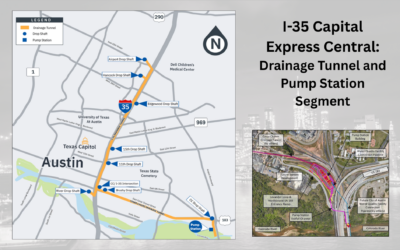
Beneath I-35: Austin’s Bold Flood Resilience Vision
For Austin and the surrounding Central Texas region, the benefits are tangible. A more resilient I-35 corridor supports mobility and commerce. Better stormwater infrastructure reduces flood exposure. Photo Credit: TxDOT By Will Parnell, PE - Parnell Engineering,...